Have you ever made a decision that seemed completely right at the time, only to realise later that you had missed something obvious?
It happens to all of us.
We make decisions based on what we know, what we have experienced and what we can currently see.
But leadership has a challenge.
The higher the responsibility, the more expensive our blind spots can become.
A poor decision may affect a team.
A wrong assumption may affect a business.
A missed warning sign may affect people who depend on our judgement.
That is why leadership should never be built around one perspective alone.
Experience is valuable, but it has limits
Experience gives us confidence.
It helps us recognise patterns.
It helps us make faster decisions.
But experience can also create familiarity, and familiarity can sometimes make us overlook what is changing around us.
We may assume that because something worked before, it will work again.
We may become so close to a problem that we stop seeing it clearly.
We may become emotionally attached to an idea because we have invested time, money or reputation into it.
This is where another perspective becomes valuable.
Not because someone else always knows better.
But because they may see what you cannot see from where you are standing.
Every leader needs people who widen their perspective
Who asks you the questions you have not considered?
Who helps you examine the assumptions behind your decisions?
Who can look at your business, leadership or personal development from a different angle?
These people may be mentors.
They may be colleagues.
They may be trusted advisers.
Sometimes they may even be people younger than you or people with very different experiences.
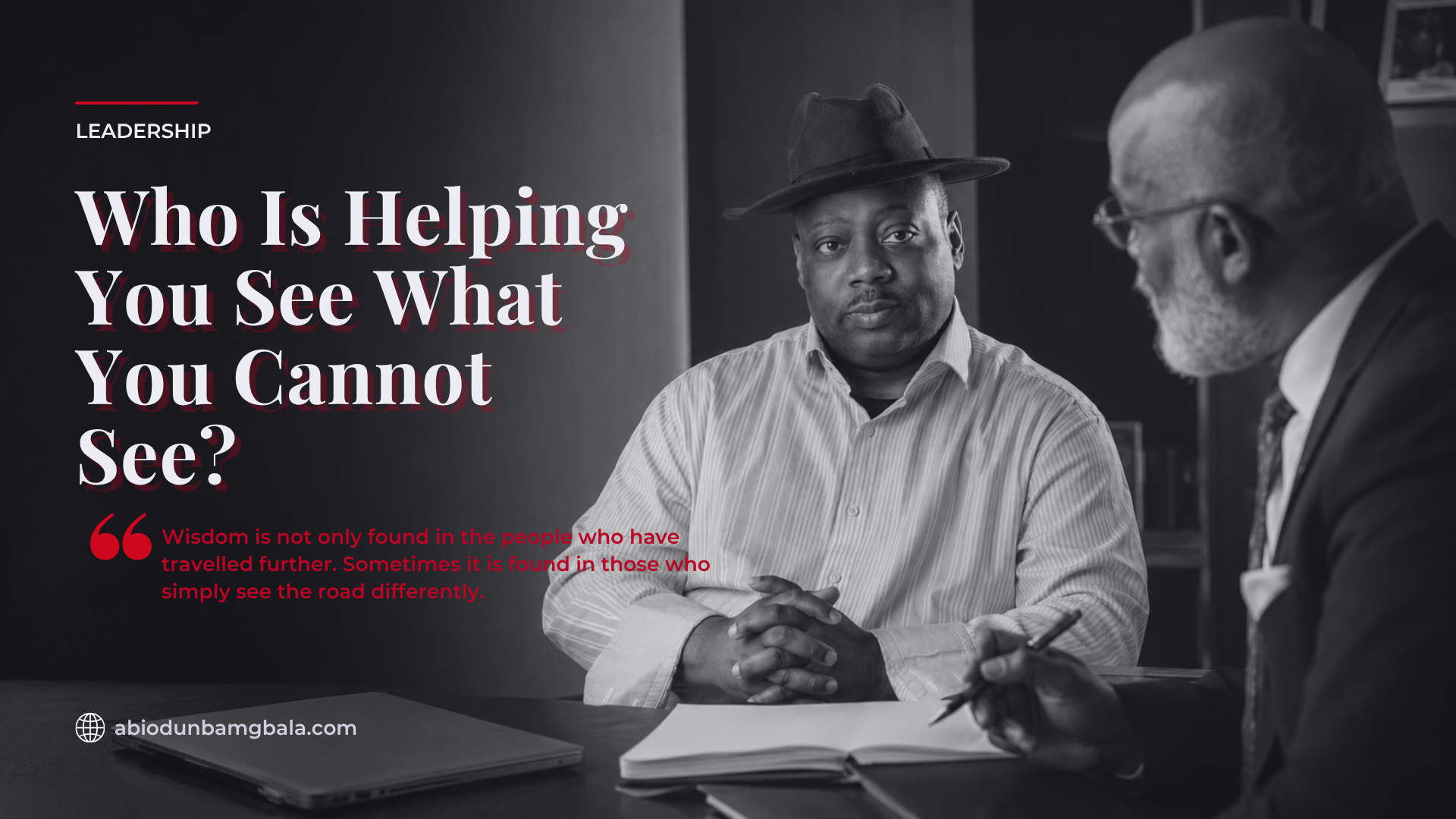
Wisdom is not only found in the people who have travelled further.
Sometimes it is found in those who simply see the road differently.
Mentorship is not about surrendering responsibility
A mentor should not make every decision for you.
Leadership still requires personal judgement.
You must still take responsibility for the choices you make.
But good mentorship can help you ask better questions before those choices are made.
It can help you recognise risks earlier.
It can help you avoid mistakes that someone else has already paid to understand.
It can also challenge you to think beyond what feels comfortable or familiar.
The goal is not to become dependent on another person’s opinion.
The goal is to become a better thinker because you have been exposed to perspectives beyond your own.
The question is not whether you need perspective
The question is whether you are intentional about finding it.
Who can speak into your decisions?
Who can challenge your assumptions?
Who helps you recognise where experience may have become familiarity?
Who is helping you see what you cannot see?
Perhaps one of the greatest advantages a leader can have is not knowing everything.
Perhaps it is having enough wisdom to remain surrounded by people who help them see more clearly.
Because sometimes the decision that changes everything begins with a perspective you could never have discovered alone.